
Drum Tuning
This page is an optional resource for drummers who want additional guidance on drum tuning and tone.
Before we jump into tuning each individual drum, it helps to understand a few basic terms and concepts.
The batter head is the head you strike when playing. The resonant head is the bottom head on snares and toms, and on the kick drum it is the head furthest away from you.
Tension also affects pitch. Lower tension produces a lower pitch, while higher tension produces a higher pitch.
Low range – loose screws to about 1.5 drum key turns
Medium range – about 1.5 to 3 drum key turns
High range – 4 drum key turns and above
A common reference point for our tuning style is Finger Tight Tension (FTT). When installing a drumhead, start by tightening the lugs with your fingers as much as possible before using a drum key. From there, tighten the lugs using a star pattern (depending on how many lugs the drum has). This distributes tension evenly across the drumhead and shell. The following diagram displays the pattern by numbers:
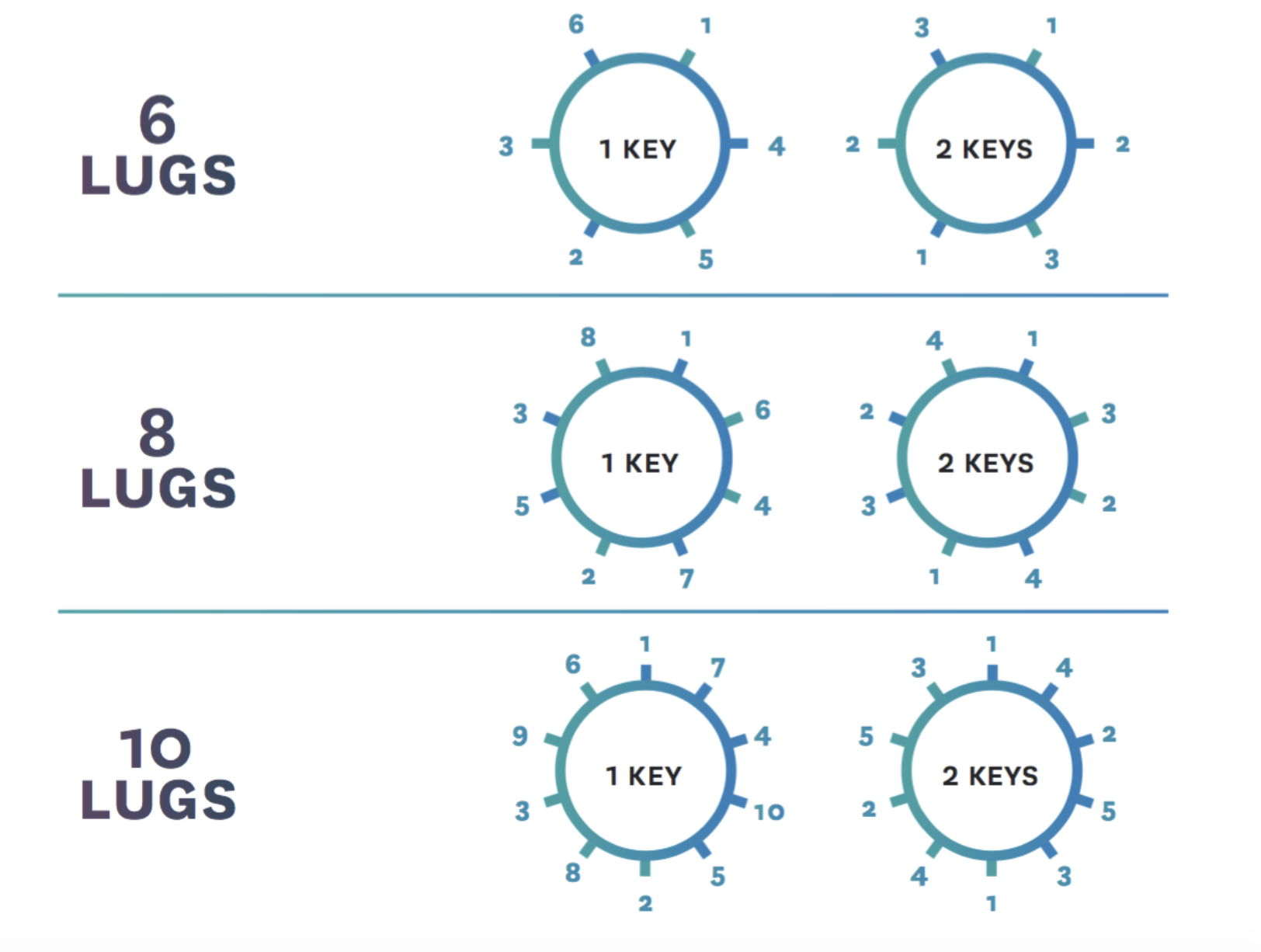
Once the drum reaches FTT, you can begin bringing each lug up in tension with the drum key until you reach your desired pitch range. Tap around the edge of the drum near each lug to check the pitch. The goal is to have each lug producing the same pitch.
One helpful thing to remember: tightening one lug affects nearby lugs. For example, on a 10-lug drum, if you tighten lug 1 a full turn, lugs 2, 6, and 7 may also be affected. This happens because increased pressure at one point lifts the rim slightly and changes the tension at neighboring and opposite lugs. This is called sympathetic tension. Small adjustments can have a big effect on the tone of the drum, especially on floor toms.
Kick
Before installing both drumheads, place some type of muffling inside the drum. This could be a pillow, foam, blanket, or similar material. Experiment with placement to achieve the sound you want. Typically, the muffling should touch the front head slightly (around 10% of the drum’s height) while not resting against the batter head. After both heads reach FTT, place the drum batter-side up. Press gently in the center of the head with your palm and confirm that each lug remains at FTT. From there, bring each lug up about ½–1 drum key turn.
Snare
Turn the snares off when trying to find the general tension/pitch range you want with the drum, and then turn them on when you’ve got the tuning you like. Start with the resonant head and tune it to a medium to high tension. For most of our style, the medium tension will serve you very well. For the batter head, a low to medium tuning range is going to be the best bet for the style and song selections we have.
We typically make our own “O-ring” out of an old drumhead and put it on top to dampen and thicken up the sound of the snare. We basically carve out an “O” from an old head, about 1.5” thick and leave the metal rim off.
Snare wire tension can vary depending on the song, allowing slightly different tones in each song. We typically go for a looser snare setting, but not rattling. Your softest notes should activate the snare wires, while your loudest notes should not cause the snares to rattle for more than about half a second after the hit.
Toms
For toms, you can tune the top and bottom heads to the same pitch for an even sound. Some drummers prefer a slight pitch bend effect, which is achieved by tuning the bottom head tighter than the top head. Rack toms typically sound good around 1.5–2 turns above FTT, while floor toms often require very little tension beyond FTT to achieve a good tone.